Source tubeless backhoe loader agricultural tire for construction, farming, and mining
Find 30 tubeless backhoe loader agricultural tire options with varying certifications and specifications. Buyers can compare models like R1 and R4, check delivery times, and request quotes for heavy-load applications.
Key considerations
Products List






Comprehensive Sourcing Guide
Sourcing Strategy for Tubeless Backhoe Loader Agricultural Tires
Technical Specifications and Construction Standards
When sourcing tubeless backhoe loader agricultural tires, buyers must first establish a clear understanding of the technical architecture that defines performance in this specific segment. The core keyword implies a tire designed for heavy-duty agricultural machinery, specifically backhoe loaders, which operate under high load and variable terrain conditions. Based on available product data, the industry standard for these units often involves a bias-belted tire design. This construction method combines the durability of bias-ply tires with the stability of belted layers, offering a balance between sidewall flexibility and tread rigidity essential for loader operations.
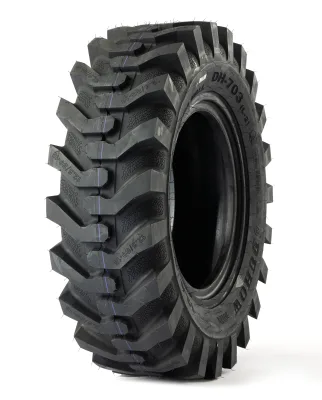
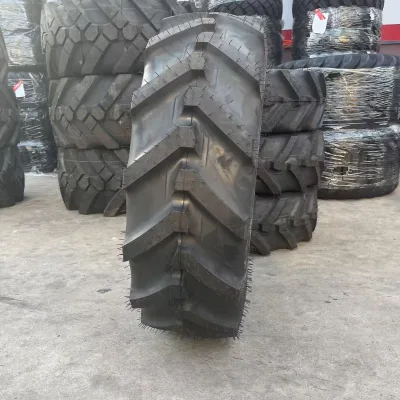
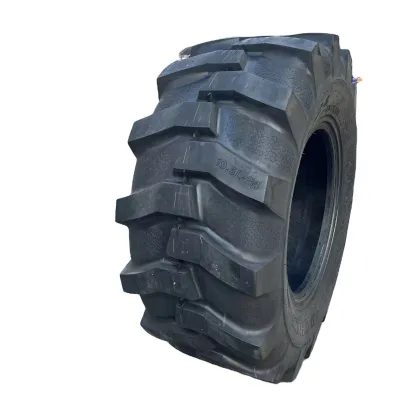
A critical specification to verify is the tire diameter. Market observations indicate that these units frequently feature diameters of 18 inches or greater, with specific high-performance models reaching 22 inches or more. The tread pattern is another decisive factor; for backhoe loaders operating in mixed environments, a cross-country tread pattern or a transverse pattern is often observed. These patterns are engineered to provide high traction levels, ensuring stability during digging, lifting, and transport cycles. The tire hierarchy, often denoted as 10PR (Ply Rating), suggests a robust construction capable of withstanding the heavy load-bearing performance required by construction and OTR (Off-The-Road) applications.
Material composition plays a vital role in longevity. The cord material is typically nylon, providing the necessary tensile strength to resist deformation under heavy loads. Similarly, the carcass material is often specified as a nylon carcass, which contributes to the overall structural integrity. Buyers should also note the presence of reinforced sidewalls, a feature explicitly listed in product attributes to protect against cuts and abrasions common in construction sites. The rubber quality is described as durable, with specific emphasis on abrasion resistance and cut resistance, which are key indicators of a tire's ability to survive harsh operating environments.
Compliance and Certification Verification
Navigating the regulatory landscape is essential for international procurement. The supply chain for these tires is heavily influenced by certification requirements that vary by destination market. Available data indicates a broad spectrum of certifications, including ECE, CCC, ISO, DOT, CE, FCC, RoHS, and GS. While not every single product listing will contain all these marks, the presence of these certifications serves as a benchmark for quality assurance.
For buyers targeting the European market, ECE and CE certifications are paramount. In North America, DOT (Department of Transportation) compliance is a mandatory requirement for road-legal operation. The CCC (China Compulsory Certification) is frequently observed, indicating adherence to Chinese national standards, which often align with international benchmarks. Additionally, ISO certifications, such as ISO9001, are standard indicators of a manufacturer's quality management system, though buyers should verify the specific scope of the certificate rather than assuming its presence based on general market trends.
It is crucial to distinguish between product-specific certifications and general corporate standards. Some listings mention standards like "Euro-Standard" or specific model-based standards (e.g., 16.9-28 R-4), which may refer to industry classification rather than a regulatory body. Buyers must request valid, current certification documents for the specific batch being purchased. Relying on a supplier's claim of "Grade Standard" without physical documentation is insufficient. The verification process should include checking the validity of the DOT and ECE numbers against official databases to ensure the tires meet the legal requirements of the importing country.
Cost Drivers and Pricing Dynamics
The pricing structure for tubeless agricultural tires is influenced by a complex interplay of factors, including raw material costs, production complexity, and logistics. The observed price range in the market spans from $2 to $1,000 USD, a wide variance that reflects differences in size, load rating, and brand positioning. A tire priced at the lower end of this spectrum may be a smaller, lighter-duty unit, while those approaching the upper limit likely represent larger diameters (≥22 inches) with advanced features like reinforced sidewalls and specialized tread compounds.
Volume is a primary driver of cost efficiency. The Minimum Order Quantity (MOQ) ranges from 1 to 1,000 units, offering flexibility for both small-scale operators and large fleet purchasers. Buyers should be aware that ordering closer to the higher end of the MOQ range often unlocks better unit pricing. However, the total cost of ownership (TCO) should be considered alongside the initial purchase price. A tire with a higher upfront cost but superior abrasion resistance and cut resistance may offer significant savings over its lifecycle by reducing replacement frequency and downtime.
Logistics and packing also impact the final landed cost. Some suppliers offer "No Packing" options, which can reduce shipping weight and cost but may require the buyer to invest in their own packaging solutions. Conversely, "with / Without Packing" options provide flexibility. The production line capacity, noted as 20 lines in some contexts, and the number of R&D engineers (15) can influence the price by reflecting the manufacturer's scale and innovation capability. Buyers should request detailed breakdowns of costs to understand how much is attributed to materials versus labor and logistics.
Typical Applications and Operational Scope
Understanding the specific application scope is vital for selecting the correct tire. The data points to a primary application in OTR (Off-The-Road) and Construction sectors, with a specific focus on backhoe loaders and agricultural machinery. These tires are designed for "All Season" operation, meaning they must perform reliably in wet, dry, and muddy conditions without degradation. The "Heavy Load" bearing performance is a critical attribute, indicating that these tires are engineered to support the substantial weight of backhoe loaders and the dynamic forces generated during digging and lifting operations.
The specific model numbers, such as 16.9-28 R-4, 16.9-24 R-4, and 12.5/80-18, provide clues to the intended machinery. The "R-4" designation typically refers to a standard industrial tread pattern suitable for hard-packed dirt, clay, and gravel, which are common in construction and agricultural settings. The "R-4C" variant suggests a reinforced version for more severe conditions. The "Cross-Country Tread Pattern" is particularly relevant for backhoe loaders that must traverse uneven terrain between job sites.
Buyers should also consider the "Special Protection" features, such as cut resistance, which are essential for environments with debris, rocks, or sharp objects. The "Reinforced Sidewall" feature further enhances durability in these high-stress applications. Whether the tire is used for agricultural harvesting or construction excavation, the common thread is the need for a robust, high-traction tire that can withstand continuous heavy loading. The "Tubeless" design offers the added benefit of reduced risk of sudden air loss compared to tube-type tires, enhancing safety and operational continuity.
Supplier Evaluation and Production Capabilities
Evaluating a supplier requires a deep dive into their production capabilities and quality assurance processes. The presence of a specific production line count (e.g., 20 lines) and a dedicated R&D team (e.g., 15 engineers) are strong indicators of a manufacturer's capacity to handle large orders and innovate. These metrics suggest a facility capable of maintaining consistent quality and meeting high-volume demands. However, buyers should verify these claims through site audits or third-party assessments.
Customization is a key differentiator in this market. The availability of "Customized" options and "OEM Service Available" status allows buyers to tailor tires to specific machinery requirements. This includes custom tread patterns, sidewall markings, and specific size modifications. The "Customization" attribute being "Available" suggests that suppliers are flexible, but buyers must clearly define their requirements to ensure the final product meets their operational needs.
The "Condition" of the tires is consistently listed as "New," which is a baseline expectation. However, buyers should also inquire about the "Rubber Quality" and "Traction Level" to ensure the product meets their specific performance criteria. The "Delivery Time" varies, with observed ranges of 15-25 days and 30-45 days. This variance highlights the importance of aligning procurement timelines with production schedules. Buyers should confirm the lead time based on their order volume and the specific model requested to avoid supply chain disruptions.
Quality Control and Long-Term Procurement
Ensuring long-term reliability requires a robust quality control (QC) strategy. The "Grade Standard" and specific model standards (e.g., 16.9-28 R-4) serve as benchmarks for quality, but buyers must implement their own QC protocols. This includes verifying the "Inner Tube" status (whether "Without Inner Tube" or "Inner Tube" is required) and ensuring the "Type" (Tubeless) matches the specification. The "Qty" of 54 units in some listings suggests that batch sizes can vary, and buyers should ensure consistency across batches.
Long-term procurement considerations extend beyond the initial purchase. The "Key Resistance" attributes, such as abrasion and cut resistance, are critical for minimizing downtime. Buyers should prioritize suppliers who can provide test data or performance guarantees related to these attributes. The "Production Line" capacity and "R&D Engineers" count indicate a supplier's ability to improve products over time, which is beneficial for long-term partnerships.
Buyers should also consider the "prod_packing" options. While "No Packing" might seem cost-effective, it can lead to damage during transit. Selecting a supplier who offers appropriate packaging solutions can protect the investment. Finally, the "Delivery Time" of 15-25 days or 30-45 days should be factored into inventory planning. Establishing a relationship with a supplier who can consistently meet these timelines is crucial for maintaining operational efficiency. By focusing on these quality and logistical factors, buyers can secure a reliable supply of tubeless backhoe loader agricultural tires that meet their demanding operational requirements.
Comparative Analysis of Tire Attributes
To facilitate decision-making, the following table summarizes key attributes observed in the market for tubeless backhoe loader agricultural tires. This comparison highlights the variability in specifications and helps buyers identify the features most relevant to their specific needs.
| Attribute Category | Common Observation | Variance / Notes |
|---|---|---|
| Tire Design | Bias Belted Tyre | Standard for heavy-duty agricultural use |
| Diameter | 18" to ≥22" | Specific models range from 18" to 22"+ |
| Tread Pattern | Cross-Country / Transverse | Designed for high traction in mixed terrain |
| Load Capacity | Heavy Load | 10PR hierarchy indicates robust load bearing |
| Material | Nylon Cord / Carcass | Provides high tensile strength and durability |
| Sidewall | Reinforced Sidewall | Essential for cut and abrasion resistance |
| Certifications | ECE, CCC, ISO, DOT | Varies by target market; verify specific batch |
| Inner Tube | Tubeless / With Inner Tube | Tubeless is standard; verify specific model |
| Season | All Season | Suitable for year-round operation |
| Packing | No Packing / With Packing | Option varies by supplier and order size |
| Delivery Time | 15-25 Days / 30-45 Days | Dependent on order volume and production schedule |
| Customization | Available | OEM services and custom specs often offered |
This table serves as a reference point for buyers to compare potential suppliers. It emphasizes that while core attributes like "Bias Belted" and "Nylon" construction are consistent, other factors like diameter, packing, and delivery times require careful verification. By using this structured approach, buyers can navigate the complexities of the market and make informed decisions that align with their operational goals.
FAQs
What certifications do tubeless backhoe loader agricultural tires have?
These tires typically hold ECE, CCC, ISO, and DOT certifications. Some listings also include CE, FCC, RoHS, and GS marks. Buyers must verify specific batch documents as not every product contains all listed certifications.
Which tread patterns are available for these agricultural tires?
Common patterns include Cross-Country Tread Pattern and Transverse Pattern. These designs provide high traction for heavy load applications. The specific pattern depends on the model, such as R-4 or R-4C variants.
Can I order customized tubeless backhoe loader agricultural tires?
Yes, customization is available for these tires. Suppliers offer OEM services and can adjust specifications like tread design or sidewall features. Buyers should define requirements clearly to ensure the final product meets operational needs.
What is the delivery time for tubeless backhoe loader agricultural tires?
Delivery times vary between 15-25 days and 30-45 days depending on the order. This range reflects production capacity and specific model requirements. Buyers should confirm lead times based on their order volume before purchasing.
How are these tires constructed regarding inner tubes?
The tires are available in both Tubeless and Inner Tube configurations. Some models are specified as Tubeless with reinforced sidewalls for durability. Buyers must check the specific product attribute to confirm the inner tube requirement.
What is the price range for tubeless backhoe loader agricultural tires?
The observed price range spans from 2 to 1000 USD. Costs vary significantly based on size, load rating, and specific features like abrasion resistance. Higher prices often correlate with larger diameters and advanced construction materials.
Which materials are used in the cord and carcass construction?
Nylon is the standard cord material used for tensile strength. The carcass material is also typically specified as Nylon Carcass. This construction supports heavy load-bearing performance and ensures durability in OTR and construction environments.